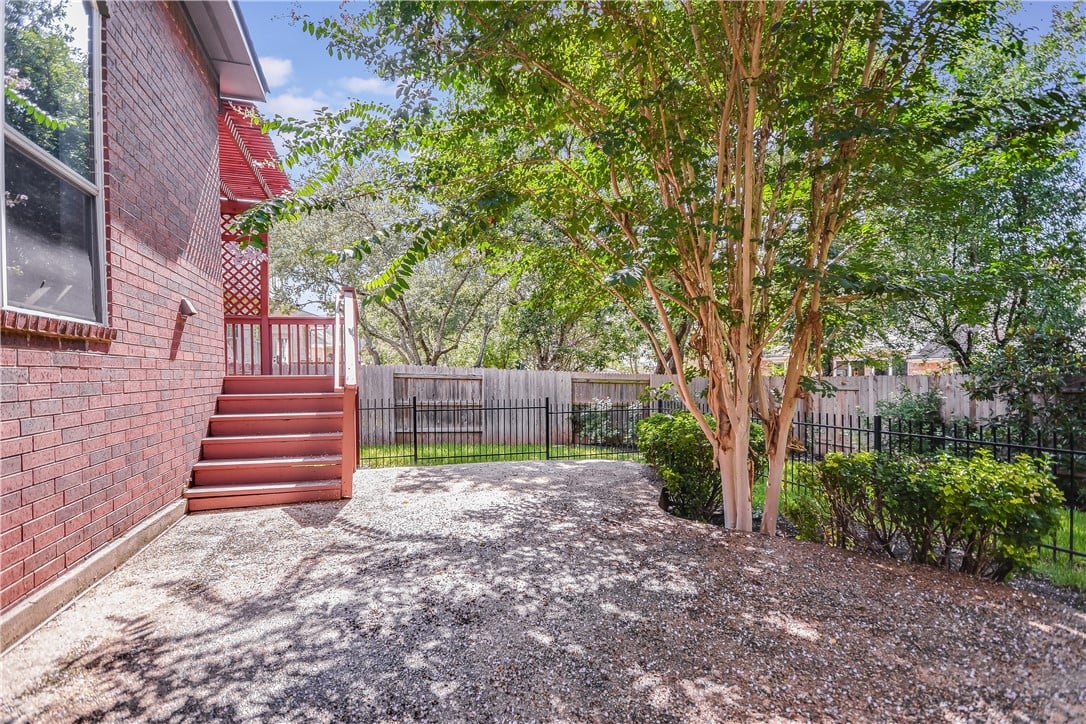
Lake Travis Property Taxes: What It Really Costs to Own
Everybody researching a move to Texas hears the same sentence. No state income tax. It is true, and it is half a sentence. The other half is a property tax bill that most people coming in from out of state have never seen anything like.
I have that conversation every week with people relocating to the Lake Travis area, and it almost always happens too late in the process. They have already picked a neighborhood. Sometimes they have already picked a house. Then the tax estimate lands and the whole budget has to be rebuilt.
So here are real numbers instead. Three homes at $400,000, $700,000 and $1,000,000, using the rates every taxing entity adopted for 2026, with what each one costs to own every month before a single mortgage payment.
Prefer to watch this on video? Check out this topic on my Youtube channel! https://youtu.be/hLR0T7AWH_o
This is the part that explains everything else, so it is worth getting straight before any of the numbers mean anything.
Texas has no state income tax. Texas also has no state property tax. Every dollar you pay comes from a local entity: your school district, the county, your city if you live inside one, the community college district, the healthcare district, and sometimes a special district layered underneath all of that.
Which means the rate belongs to your address rather than to your city or your price point. Two houses at the same price, ten minutes apart, can sit several hundred dollars a month apart on taxes alone. People shop by neighborhood and assume the tax rate comes along with it. It does not.
Here is the full stack for a home inside the City of Lakeway and Lake Travis ISD, with no special district underneath it. These are the adopted 2026 rates, expressed per $100 of taxable value.
Combined, that comes to $1.825692, or roughly 1.83 percent of assessed value before any exemptions.
Two things in that list are worth pulling out. The school district is more than half the bill, and Lake Travis ISD adopted the lowest rate in its history this year, the latest step in a multi-year decline. Meanwhile the city line, which is the one people ask about most, is the smallest thing on the list. Lakeway sits at about seventeen cents. The City of Bee Cave charges two cents and has held that rate for roughly twenty budget cycles. The city is almost never where the money is.
The relief side is real, and it improved recently. If the home is your primary residence, you file a homestead exemption with the Travis Central Appraisal District. It is free, it takes a few minutes, and people forget to do it every single year.
What it gets you:
That last one is the quiet hero of the list. It is what protected long-time owners here through the last run-up, and it is a genuine argument for buying sooner rather than waiting if the plan is to stay a while.
Same assumptions throughout: a City of Lakeway address inside Lake Travis ISD, homestead exemption filed, no special district.
A $400,000 home runs roughly $5,500 a year, or about $460 a month. A $700,000 home runs roughly $10,800, or about $900 a month. A $1,000,000 home runs roughly $16,000, or about $1,335 a month.
That $900 a month on the seven hundred thousand dollar house is the figure that makes people from Michigan or Ohio sit up a little straighter. It is also the honest trade for everything the state never takes out of your paycheck. For plenty of the people I work with, especially the self-employed ones and the ones living off what they have already built, that trade comes out strongly in their favor. It is worth running your own math rather than assuming it either way.
A lot of the newer master-planned neighborhoods around the lake sit inside a Municipal Utility District, which everyone calls a MUD. There are also Public Improvement Districts, which work differently and land in the same place on your bill.
The mechanic is simple enough. When a developer builds out where there is no existing city water, sewer or road infrastructure, a district gets created to issue bonds and pay for all of it. The homeowners then repay that debt through an extra line on the property tax bill. Depending on the district and how far along it is in retiring what it borrowed, that line commonly adds somewhere between twenty and fifty cents per $100 of value.
On a $700,000 home, a forty-cent MUD rate is another $2,300 a year. Call it $190 a month, for the same house at the same price, because of which side of a boundary line it happens to sit on.
None of which makes a MUD a trap. It is how a brand new community gets its trails, its pools, its amenity center and its roads, and the rate typically steps down over the years as the district pays off its bonds. Some of the neighborhoods I like best out here sit in one. The problem is finding out about it at closing instead of before the offer.
Every taxing entity in Texas has to publish its rates, and the Travis County Tax Office collects them in one place. Enter an address on their truth-in-taxation page and it will show you every single entity that taxes that specific property and what each one charges. It is free, it is public, and it takes about four minutes. More than once it has changed which house was the better buy for someone I was working with.
Property taxes get all the attention. Homeowners insurance is what actually surprises people, and this far inland it has nothing to do with hurricanes. It is hail. Central Texas sees hail events most years that take roofs off an entire neighborhood at a time, and carriers have repriced hard for it. Texas now sits among the most expensive states in the country for home insurance.
Three things about a Texas policy that people from other states have usually never dealt with. Your wind and hail deductible is often a percentage of your dwelling coverage rather than a flat dollar amount, so a 2 percent deductible on a $700,000 rebuild cost means $14,000 out of pocket before the policy pays anything. Roof age matters enormously, and many carriers will pay depreciated value on an older roof instead of replacement cost, or decline the house outright. And flood is always a separate policy, worth looking at even well away from the water, because this area is full of creeks and low water crossings and the maps are worth pulling on any lot with a drainage feature.
The practical advice is to get a real quote in the first week of a home search rather than the last. An actual quote from a Texas agent on an actual address, not an online estimate. It moves the monthly payment more than people expect.
You have probably read that Texas is deregulated and you get to shop for an electricity provider. Around the lake, mostly you do not. Much of this area is served by Pedernales Electric Cooperative, a member-owned co-op that never opted into retail competition, so you buy from the co-op at board-approved rates with no plan shopping and no switching. Inside Lakeway there is actually a split, with homes south and east of Hurst Creek served by Austin Energy and the rest of the city on Pedernales. Same city, two utilities.
On the bill itself, Texas electricity rates run below the national average while Texas electricity bills do not, because we use far more of it. The average Texas household runs around 1,300 kilowatt hours a month against a national average closer to 900. That gap is air conditioning, and in August, in a larger home with a pool pump running, it shows up.
Water has its own wrinkle. Much of this area is served by the West Travis County Public Utility Agency, which raised retail wastewater rates in April 2026, its first increase since 2016, phased in over three years. A household using around 10,000 gallons a month saw roughly $23 added. The real driver on a Hill Country water bill, though, is irrigation. A large lot with a lawn and a sprinkler system can run a couple hundred dollars a month in summer, and we are frequently under watering restrictions that limit irrigation to assigned days and hours anyway.
Further out, toward Spicewood and the more rural pockets, you may be on a well and a septic system instead. No water bill, which sounds great, and also a pump and treatment system you now own. Aerobic septic systems require a maintenance contract and periodic inspections.
None of these changes anyone's life on its own. Together they are a few hundred dollars a month that nobody budgeted.
It depends entirely on where you are coming from, and the honest answer splits in two directions.
From coastal California or the New York metro, the housing math still works strongly in your favor, and the income tax savings are real money every month. That is especially true for anyone self-employed or with a meaningful share of variable income.
From the Midwest, from Michigan or Ohio or Illinois, the picture is more mixed than the internet suggests. Housing cost may go up rather than down, and the property tax rate here will likely run higher than what you are used to. What you are buying is the weather, the lake, the job market and no income tax. That is a genuine trade worth making for a lot of people, and it is a trade rather than a free lunch.
One more thing worth saying plainly. Austin corrected. Prices came down meaningfully from the 2022 peak, and this has been a buyer's market for a while now. That is a better entry point than most people relocating here realize.
Put all of it together and here is what it costs to own, every month, before any mortgage payment. Taxes, insurance, water, power and typical dues, with the homestead exemption filed and no MUD.
The $400,000 home lands somewhere between $900 and $1,200 a month. The $700,000 home runs between $1,500 and $1,900. The $1,000,000 home runs between $2,100 and $2,800. Add a MUD and the top of each range climbs by another $150 to $300.
That is the number worth knowing before the first showing rather than after the inspection. Not because it should talk anybody out of moving here, but because the people who end up happiest in this area are the ones who ran it honestly on the front end and then chose a house that fit it.
If you are weighing a move to the Lake Travis or Austin area and want these numbers run on a specific address, including the exact tax rate and whether the property sits inside a district, Ellen Steele is always glad to have that conversation.
Tax rates, insurance costs and utility rates referenced here are current as of October 2026 and change annually. Property tax figures are estimates built from adopted 2026 rates for a City of Lakeway address within Lake Travis ISD with a homestead exemption and no special district. Verify current rates and exemptions for any specific property through the Travis County Tax Office and the Travis Central Appraisal District before making a purchase decision. This is general information and is not tax, legal or insurance advice.
Here's what it actually costs to own here every month.

From Lake Travis to greater Austin, Ellen helps clients navigate every opportunity with confidence and care. Let's connect and make your next move a success.

ELLEN STEELE
801 BARTON SPRINGS RD FL 9 AUSTIN, TX 78704